

Every startup hits that moment when growth and compliance collide. You’ve built a product, gathered your first customers, and now the quiet question begins to echo: How do we prove we’re serious about security and privacy without slowing down? This is where the “shopping list” comes in. Think of it as your startup’s cheat sheet, not for codes or widgets, but for credibility and trust. It’s not just a collection of checkboxes; it’s the backbone of a confident, future-proof program that speaks your mission louder than any pitch.
In this article, you won’t find legalese or endless jargon. Instead, you’ll get a straightforward breakdown of the must-have elements every successful security and privacy program needs, from governance structure to risk controls, from certification basics to real-time protection tactics. Whether you’re out to build trust with investors, scale smart with partners, or simply protect your early users, this list helps you do it with clarity and speed.
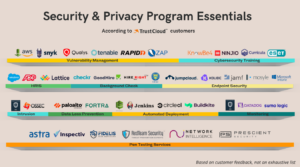
Whether your org is about to begin its journey for SOC 2, or you’re planning to wrangle up more standards (think ISO 27001, CMMC, and HIPAA, to name a few), the set of tools and software you have in place can be make-or-break. We asked our customers what their recommended tools were and compiled your shopping list for security and privacy program essentials.
What is a security and privacy program?
A security and privacy program is a structured framework that organizations implement to protect sensitive data, secure IT systems, and ensure compliance with regulatory requirements. It combines policies, procedures, tools, and training to manage risks related to data breaches, unauthorized access, and misuse of personal or business information.
At its core, a security and privacy program covers several key areas:
- Governance and Policies: Defining roles, responsibilities, and rules for data protection.
- Risk Management: Identifying, assessing, and mitigating security and privacy risks.
- Technical Controls: Implementing security measures such as encryption, firewalls, access controls, and monitoring.
- Compliance and Legal Requirements: Ensuring adherence to standards like GDPR, HIPAA, or SOC 2.
- Training and Awareness: Educating employees about security best practices and privacy responsibilities.
The goal of a security and privacy program is not just to prevent incidents but to build trust with customers, partners, and stakeholders, streamline regulatory compliance, and create a culture where protecting sensitive data is embedded in everyday business operations.

Tools or services marked with * denote a partner or integration.
Understanding the evolving threat landscape
The first step in constructing an enduring program is understanding the modern threat landscape. Cyberattacks have grown in sophistication, exploiting every possible vulnerability from weak authentication practices to misconfigurations in cloud environments. Data breaches, ransomware outbreaks, phishing, and insider threats are just a few examples. It is imperative that security programs remain adaptive and agile, anticipating shifts in attacker methods and continuously addressing new threats.
To effectively counter these threats, your program should start with a detailed risk assessment. Identify key assets, perform regular vulnerability scans, and incorporate threat intelligence feeds. These measures provide an actionable picture of where vulnerabilities lie and how best to fortify them. Evaluating risk in the context of business impact ensures that security resources are allocated in alignment with organizational priorities.
- Perform comprehensive risk assessments
Begin by identifying critical organizational assets, including data, systems, and intellectual property. Assess the likelihood and potential impact of threats on each asset. A structured risk assessment enables teams to focus on high-priority areas, allocate resources effectively, and implement targeted controls. Regular updates ensure the assessment reflects changes in technology, business operations, and threat trends. - Leverage continuous vulnerability scanning
Regularly scanning systems, networks, and applications uncovers weaknesses before attackers can exploit them. Automated tools detect misconfigurations, outdated software, and insecure endpoints. By integrating these scans into the security program, organizations gain real-time visibility into vulnerabilities, enabling proactive remediation. Timely patching and configuration management reduce the attack surface and strengthen overall cybersecurity posture. - Incorporate threat intelligence feeds
Threat intelligence provides actionable insights into emerging attack vectors, malware signatures, and attacker tactics. By analyzing data from multiple sources, security teams can anticipate potential threats, identify patterns, and prepare defensive measures. Integrating intelligence feeds into monitoring systems allows for automated alerts, improving detection and response capabilities while keeping the organization ahead of sophisticated threat actors. - Address insider threats proactively
Not all threats originate externally; insider risks, intentional or accidental, pose significant challenges. Monitoring user behavior, implementing role-based access controls, and conducting regular audits help detect anomalies. Training employees on cybersecurity hygiene and establishing clear reporting mechanisms fosters awareness and accountability, reducing the risk of internal breaches or inadvertent exposure of sensitive information. - Prioritize risks by business impact
Not all vulnerabilities carry equal consequences. Evaluating risks in the context of business impact ensures that security efforts focus on protecting high-value assets. This prioritization allows organizations to allocate budgets, personnel, and technology effectively. By linking security initiatives to operational objectives, teams can justify investments, reduce exposure to critical risks, and maintain alignment with organizational goals. - Maintain adaptive and agile defenses
The threat landscape evolves rapidly; static security measures quickly become obsolete. Implement adaptive strategies such as continuous monitoring, automated incident response, and periodic policy reviews. Agile defenses enable organizations to respond swiftly to emerging threats, adjust controls as attack patterns change, and sustain resilience. This proactive approach ensures that security programs remain relevant, effective, and aligned with the organization’s risk appetite.
Read the “Emerging technologies and threats: how to adapt your data classification policy” article to learn more!
Planning your security program
A successful security program begins with meticulous planning. The planning stage should start by clearly defining the program’s scope, objectives, and accountability structure. Organizations need to identify all assets, including hardware, software, data, and intellectual property, and assess their criticality. This identification process enables security teams to allocate resources effectively by prioritizing protection where it is most needed.
Establishing well-defined roles and responsibilities is equally important. A dedicated cybersecurity team, if feasible, can oversee the implementation and maintenance of security mechanisms. In smaller organizations, assigning security responsibilities to existing staff or partnering with security consultants can be an effective alternative. During the planning phase, organizations should also consider future scalability and adaptability, ensuring that the security program can evolve with emerging threats or changing business needs.
Additionally, secure planning necessitates incorporating both technological and human elements. It is important to align security goals with overall business objectives. This integration can help in securing board-level support and ensuring that the necessary investments are made over time.
Establishing a robust governance framework
An effective security and privacy program is anchored in strong governance. A well-defined framework not only establishes clear policies and procedures but also delineates roles and responsibilities across the organization. Governance should be integrated into every layer of the business, from executive leadership to IT teams on the ground.
Develop policies that clearly articulate your organization’s risk tolerance, acceptable use policies, access controls, and incident management strategies. With governance, consistency is key; ensure that policies are documented, communicated, and routinely reviewed to address emerging threats and changes in organizational structure. In addition, setting up a security steering committee can drive continuous improvements and ensure alignment between business objectives and security initiatives.
Vulnerability management
What these tools do
Vulnerability management is a safeguard against the cracks attackers love to exploit. These tools act like a constant security audit, scanning computer systems, networks, and applications for weaknesses before bad actors can find them. Beyond simple detection, they help teams prioritize which risks demand immediate attention, ensuring effort is spent where it matters most.
With built-in guidance for patch management, they streamline the often messy process of fixing issues across complex environments. The added benefit? Clear, actionable reports that not only track progress but also give leadership the confidence that their security posture is improving day by day.
Cybersecurity training
What these tools do
Cybersecurity training tools transform security from an abstract concept into everyday practice. Instead of relying on dry manuals or one-off lectures, these platforms deliver interactive modules, real-world simulations, and hands-on exercises that keep learners engaged. Employees can experience what phishing attempts look like, test their reactions in simulated attacks, and measure their progress through assessments that reveal strengths and gaps.
For organizations, the reporting features provide a clear view of overall readiness, making it easier to spot where additional focus is needed. By embedding cybersecurity knowledge into daily routines, these tools help build a culture where security isn’t just an IT concern but a shared responsibility across the entire workforce.
Looking for automated, always-on IT control assurance?
TrustCloud keeps your compliance audit-ready so you never miss a beat.
Learn MoreHuman resources information system
What these tools do: automate the process of evaluating employee performance. They enable goal setting, continuous feedback, and performance tracking. These tools improve efficiency, align individual goals with organizational objectives, and support the identification of areas for improvement.
Background Check
What these tools do: verify personal, professional, and criminal histories of individuals. They utilize data sources to confirm identities, validate employment and education history, conduct criminal record checks, and sometimes assess credit history. These tools enable organizations to make informed hiring decisions and mitigate potential risks.
Endpoint security
What these tools do: protect individual devices (endpoints), such as computers, laptops, and mobile devices, from various security threats. They help prevent unauthorized access, detect and block malware, enforce security policies, and provide features like firewall protection, encryption, and vulnerability scanning. Endpoint security tools aim to secure endpoints and the data they store, both on-premises and in cloud environments.
Intrusion detection
What these tools do: monitor and analyze network traffic to detect and alert potential security breaches or unauthorized access attempts.
Data loss prevention
What these tools do: help prevent sensitive data from being unintentionally or maliciously leaked, both internally and externally. They monitor and control data movements, apply policies to detect and block unauthorized transfers, and encrypt or tokenize sensitive information to protect it from unauthorized access.
- Palo Alto Network
- Digital Guardian (Fortra)
Source control
What these tools do: manage and track changes to source code and other files in software development projects. They provide features such as code collaboration, revision history, branching and merging, conflict resolution, and backup capabilities. These tools help teams work together efficiently, maintain code integrity, and facilitate easy rollback to previous versions if needed.
- This post does a great job of listing some of the best-known version control tools
Automated deployment
What these tools do: streamline the process of deploying software applications by automating various tasks involved in the deployment process. They enable the rapid, consistent, and error-free deployment of applications across different environments. These tools typically handle tasks such as building and packaging the application, configuring infrastructure, orchestrating deployment processes, and managing the release of new versions. They help improve deployment speed, reliability, and scalability while reducing manual effort and minimizing the risk of errors.
Monitoring
What these tools do: track and collect data on various aspects of a system, network, or application, providing real-time visibility and insights into performance, availability, and security.
Penetration testing
What it is: a security assessment technique where ethical hackers simulate real-world attacks to identify vulnerabilities and weaknesses in a system or network.
TrustCloud has a pool of CPA audit firms and partners to help provide a joyfully crafted audit experience.
To see their pricing, availability, and turnaround time, click here.
The CISOs’ Guide to AI Governance
This guide helps CISOs & security leaders establish structure and scale around AI risk, regulatory compliance, and internal controls, without slowing down innovation.
Essential people, process, and technology pillars
The success of your security program depends on a balanced integration of people, processes, and technology. Neglecting any one of these areas can leave gaps that adversaries can exploit.
People
Human error and insider threats remain significant risk factors. Investing in robust training programs for employees at all levels is paramount. Develop a layered training initiative that includes general cybersecurity awareness as well as role-specific training for those with elevated privileges or specialized responsibilities. Regular drills, simulated attack scenarios, and phishing tests can help create a vigilant workforce. Moreover, organizations should incentivize a security-first culture by celebrating best practices and integrating security expectations into performance metrics.
Processes
Standardized and well-documented processes form the backbone of any mature security program. From vulnerability patch management to change control, having clear, repeatable procedures ensures consistency and quality in security operations. Consider adopting ITIL frameworks to guide your processes, ensuring that incident response, access management, and compliance audits have well-defined steps. Additionally, establishing cross-department collaboration processes will help ensure that security policies are applied consistently across every unit.
Technology
Technology solutions are the first line of defense against external threats. Deploying layered defenses, firewalls, intrusion detection and prevention systems (IDPS), encryption, and secure authentication mechanisms can dramatically reduce attack surfaces. As you integrate new technologies such as Artificial Intelligence (AI) and machine learning, ensure that these solutions undergo rigorous security vetting and align with your overall risk strategy. Also, consider investing in security orchestration and automation platforms to reduce response times and coordinate defenses across your organization.
Read the “Boost trust with powerful ethical AI and data privacy practices” article to learn more!
Data privacy: best practices
Data privacy is a fundamental pillar of any effective security and compliance program. Protecting sensitive information safeguards not only regulatory compliance but also customer trust, intellectual property, and the organization’s reputation. A robust privacy program integrates proactive measures such as data minimization, strong encryption, and clear retention policies.
Coupled with governance frameworks, regular audits, and cross-functional collaboration, these practices help organizations identify vulnerabilities, reduce risk exposure, and maintain resilience against evolving threats. By embedding privacy into operational and strategic decision-making, companies can ensure that personal and sensitive data is handled responsibly, securely, and in alignment with both business objectives and legal obligations.
- Data minimization
Collect and retain only the information necessary to achieve specific business purposes. Minimizing data reduces exposure in case of breaches and simplifies compliance with regulations such as GDPR or CCPA. It also helps organizations focus on managing critical data effectively, improving security, and lowering the risk associated with storing excessive or redundant information. - Strong encryption practices
Implement encryption for data both at rest and in transit to protect sensitive information from unauthorized access. Encryption ensures that even if data is intercepted, it remains unreadable. Using industry-standard protocols, regularly updating encryption keys, and monitoring cryptographic implementations enhances security and mitigates risks associated with cyberattacks or accidental data leaks. - Clear data retention policies
Establish policies defining how long different types of data should be stored and when they should be securely deleted. Proper retention practices minimize the risk of holding outdated or unnecessary information, reduce compliance exposure, and simplify data management. Consistent enforcement ensures that data is available only as long as it is necessary for legal, operational, or strategic purposes. - Regular audits of data handling
Conduct periodic audits to assess how data is collected, stored, processed, and shared. Audits identify gaps in procedures, potential vulnerabilities, and non-compliance with internal policies or regulations. By reviewing these practices systematically, organizations can remediate issues proactively, reinforce accountability, and ensure that privacy safeguards remain effective in a rapidly evolving digital environment. - Robust governance framework
Develop a governance structure that includes data classification policies, access controls, and clearly defined responsibilities. This framework ensures that sensitive data is properly managed across departments and that employees understand their roles in protecting information. Strong governance provides transparency, accountability, and consistency in handling data while aligning privacy efforts with organizational objectives. - Collaboration with legal and compliance teams
Work closely with legal and compliance professionals to stay informed about evolving regulatory requirements. They help interpret laws such as GDPR, HIPAA, and CCPA, ensuring privacy policies and procedures remain up to date. Collaborative efforts also facilitate timely adjustments to processes, risk assessments, and employee training programs, reducing legal exposure and maintaining stakeholder trust.
Integrating tools into a cohesive program
Having individual tools for vulnerability management, cybersecurity training, endpoint protection, and automated deployment is valuable, but the real power comes when they work together as part of a cohesive security and privacy program. Silos create blind spots, duplicated efforts, and gaps that attackers can exploit. By integrating these tools, startups can create a centralized view of risk, streamline workflows, and ensure consistent enforcement of policies across the organization.
For example, insights from vulnerability management can feed directly into automated patching systems, while cybersecurity training results can inform risk prioritization for endpoint and network defenses. Similarly, monitoring and intrusion detection tools can provide real-time alerts that trigger security awareness reminders or incident response protocols. When all of these components communicate effectively, the startup doesn’t just respond to threats, it anticipates them, reducing downtime, boosting compliance confidence, and giving investors, partners, and users tangible proof that security and privacy are baked into the business DNA.
Integration also allows for better reporting and audit readiness. Instead of juggling multiple dashboards and spreadsheets, leadership can see a single, unified view of security posture, risk exposure, and compliance status. This level of visibility doesn’t just satisfy auditors; it empowers decision-makers to allocate resources wisely, prioritize initiatives, and continuously improve the program as the startup scales.
Prove to customers that you take privacy seriously
Adopt and maintain compliance with GDPR, CCPA, PCI and ISO 27701 so you can show customers and prospects that you’re serious about privacy. TrustCloud helps you achieve and maintain regulatory compliance with confidence as you grow.
Bringing your security and privacy “shopping list” to life
A security and privacy “shopping list” only works if it fits how your team actually builds and ships products. The goal is not to buy every shiny tool; it is to cover a few core capabilities really well, governance, identity, endpoint protection, monitoring, training, and data protection, then layer on extras as you grow. That means picking tools that integrate cleanly with your stack, automate evidence for frameworks like SOC 2 and ISO 27001, and give you a single, understandable view of risk instead of scattered dashboards.
The smartest teams also revisit this list at least annually. As your architecture, customer profile, and regulatory footprint evolve, some tools will move from “nice to have” to “non‑negotiable,” while others may consolidate into platform capabilities you already own. Treat your shopping list like a living roadmap: tag each tool to the risks it mitigates, the controls it supports, and the KPIs it improves. That way, every renewal and new purchase can be justified in simple language, how it helps protect data, accelerate deals, or reduce audit pain for the people doing the work.
Summing it up
Implementing the right tools is just the beginning. The true value lies in weaving them into your startup’s DNA. A comprehensive security and privacy program isn’t merely a set of tools; it’s a mindset that permeates every decision, from product development to customer interactions. By integrating these essential components, you not only safeguard your organization but also build a foundation of trust and resilience.
As you embark on this journey, remember that compliance is not a destination but an ongoing process. Stay proactive, stay informed, and continuously refine your approach to adapt to evolving threats and regulations. With the right strategies and tools in place, your startup can navigate the complexities of security and privacy with confidence, ensuring long-term success and stakeholder trust.
FAQs
What are the essential components of a security and privacy program for startups?
A robust security and privacy program for startups is built on multiple interconnected components that collectively protect sensitive data, maintain regulatory compliance, and foster trust with customers and partners. Governance and policies form the foundation, defining roles, responsibilities, and procedures to ensure data is handled responsibly. Risk management identifies, assesses, and mitigates potential threats before they can cause damage, while technical controls, like firewalls, encryption, and access restrictions, actively safeguard systems and networks.
Compliance with regulations such as GDPR, HIPAA, or SOC 2 ensures legal adherence, while ongoing training and awareness initiatives empower employees to recognize and respond to security threats. By combining these elements, startups can create a proactive, resilient security culture rather than simply ticking checkboxes.
How do vulnerability management tools enhance a startup's security posture?
Vulnerability management tools play a critical role in strengthening a startup’s security posture by detecting weaknesses before they can be exploited. These tools scan computer systems, networks, and applications to identify vulnerabilities, then prioritize risks based on potential impact and likelihood of exploitation.
Beyond detection, they provide actionable guidance for patching and remediating issues, helping teams focus their efforts on the areas that matter most. Reporting features give leadership a clear view of security progress, enabling better decision-making and accountability. By continuously monitoring and addressing vulnerabilities, startups reduce the likelihood of data breaches and downtime, creating a more secure environment for customers and internal operations alike.
Why is cybersecurity training important for startups, and how do these tools facilitate it?
Cybersecurity training is essential for startups because human error is often the weakest link in an organization’s security defenses. Interactive training platforms transform abstract security concepts into practical, engaging experiences.
Employees can participate in simulations, test their responses to phishing attacks, and measure their progress through assessments, which highlight both strengths and areas needing improvement. Beyond skill-building, these tools generate reports that allow management to monitor overall organizational readiness and identify knowledge gaps. By embedding cybersecurity awareness into daily routines, startups create a culture of shared responsibility, ensuring that employees understand how their actions affect the security and privacy of company data, customer information, and overall business integrity.