

Building a Customer Assurance & Continuous Control Monitoring Program that earns customer trust. Access on-demand →

How much does it cost to get SOC 2?

Richa Tiwari

Sep 22, 2023

Cost of SOC 2

SOC 2 compliance is fast becoming a critical requirement for companies that handle sensitive customer data. Even though achieving compliance may seem daunting, not only in terms of meeting the actual requirements but also in addressing the associated costs, it is essential to understand the breakdown of factors that contribute to the overall expense. In this article, we explore the cost components of obtaining SOC 2 certification, discuss the variables that can affect pricing, and provide insights into how an organization can budget for this important compliance milestone.

Introduction to SOC 2

SOC 2, which stands for Service Organization Control 2, is a framework designed to help companies demonstrate the effectiveness of their security controls. Specifically tailored for service organizations, SOC 2 reports are based on five trust service criteria: security, availability, processing integrity, confidentiality, and privacy. With increasing regulatory scrutiny and rising customer expectations regarding data integrity and privacy, compliance with SOC 2 has become a competitive necessity for technology companies, cloud service providers, and other organizations that manage sensitive information.

By increasingly relying on third-party vendors and cloud-based solutions, businesses are placing a renewed focus on security and data integrity. A SOC 2 certification is not only a compliance checklist item; it serves as a testament to an organization’s commitment to safeguarding data. This, in turn, can bolster customer trust and even open doors to new business opportunities. However, the journey toward SOC 2 compliance entails a monetary investment that varies widely from one organization to another.

A commonly asked question about SOC 2 is “How much does a SOC 2 attestation cost?” However, there isn’t a single answer, because the cost depends on multiple factors, including the size of your organization and the tools in your tech stack. The total costs of an SOC 2 audit can range from tens to hundreds of thousands of dollars, and the cost can be reduced by working with a platform like TrustCloud.

In this article, we will see what specific factors influence an audit’s cost, how you can estimate the expense, the cost breakdown, and how you can lower this expense with the help of Trust Assurance, the next generation of compliance automation. 

Firstly, understand that SOC 2 (System and Organization Controls 2) is a framework and audit standard used to assess and report on the controls and practices related to data security, availability, processing integrity, confidentiality, and privacy within service organizations. It helps organizations demonstrate their commitment to protecting sensitive information and provides transparency to customers and partners. It is designed to assess and report on the controls and practices related to the security, availability, processing integrity, confidentiality, and privacy of customer data and information within service organizations. SOC 2 reports are essential for organizations that provide services to other businesses and handle sensitive data.

How much does it cost to get SOC 2?

The cost of getting SOC 2 certification typically ranges from $15,000 to $100,000, depending on factors like company size, audit scope, and whether you choose Type I or Type II. SOC 2 Type I is generally less expensive, ranging from $10,000 to $25,000, as it evaluates controls at a specific point in time. Type II costs more, $30,000 to $100,000+ because it assesses controls over a longer period. Additional expenses include readiness assessments, tools, and internal resources. While it’s a significant investment, SOC 2 enhances customer trust and is essential for doing business with security-conscious enterprises.

Key components of SOC 2 costs

SOC 2 compliance comes with distinct cost components that shape the overall investment. Audit fees, consulting support, and technology upgrades form the core expense areas. Each plays a critical role in preparing your environment, validating controls, and maintaining ongoing readiness. Understanding these categories helps organizations plan budgets and build a realistic path toward certification.

1. Audit Fees

Audit fees typically represent the largest portion of SOC 2 expenses. Costs vary based on organizational size, operational complexity, and the trust service criteria included in scope. Smaller companies may spend between US$20,000 and US$60,000, while larger or more complex environments may see fees rise to US$60,000–US$100,000. These independent assessments validate control effectiveness and are essential for certification.

2. Consulting Fees

Many organizations rely on consultants to interpret SOC 2 requirements, improve security practices, and guide remediation. Consulting fees may be hourly, usually between US$150 and US$400, or project-based, which can range from US$30,000 to over US$100,000. This investment accelerates readiness by reducing internal workload, clarifying expectations, and addressing control gaps efficiently.

3. Technology Expenses

Technology upgrades are often needed to meet SOC 2’s operational and security expectations. These may include monitoring platforms, documentation tools, access management systems, or enhanced encryption solutions. Organizations generally invest US$10,000 to US$50,000 depending on their existing setup. These tools not only support compliance but also strengthen the long-term security posture and reduce operational risks.

While SOC 2 certification requires a meaningful financial commitment, the long-term value far outweighs the upfront costs. These investments improve security operations, streamline audits, and build lasting trust with customers and partners. By planning for audit, consulting, and technology expenses, organizations can pursue compliance with clarity, confidence, and a stronger foundation for future growth.

TrustCloud
TrustCloud

Looking for automated, always-on IT control assurance?

TrustCloud keeps your compliance audit-ready so you never miss a beat.

Learn More

Costs to consider for a SOC 2 attestation 

Consider SOC 2 compliance as an investment in your organization’s future, and just like any other investment, it requires a significant amount of time, effort, and money. SOC 2 reports provide details on information security controls at a service organization, and they are provided by a licensed CPA firm. These controls are divided into five Trust Service Categories: Security, Availability, Integrity, Confidentiality, and Privacy.

The cost of obtaining a SOC 2 (System and Organization Controls 2) attestation  depends on several factors, including the size and complexity of your organization, the scope of the audit, the chosen audit firm, and the current state of your security and compliance measures. Here are some factors that can influence the cost:

  1. Scope and Complexity
    If your organization’s systems and processes are complex, it will require more effort to assess and audit them. A larger scope and more intricate systems will generally result in higher costs.
  2. Trust Service Criteria
    The number of in-scope Trust Service Criteria defines the overall scope. The cost of the audit will differ based on the number of Trust Service Criteria in scope. In general, the Security Trust Service Criteria is the most common, because it’s mandatory, but as you add more scope, such as privacy or confidentiality, the price might increase.  
  3. Type of Audit
    There are two kinds of SOC 2 audits: Type I and Type II. Type I reports on the design and existence of controls at a specific point in time, while Type II reports on the effectiveness of controls over a period of time (typically six months or more). Type II audits are generally more expensive due to their longer duration.
  4. Audit Firm and Consultants
    The choice of audit firm can significantly impact the cost. Well-experienced firms charge higher fees, but they may provide more comprehensive and reputable services. You need to find a balance between cost and quality. Sometimes organizations hire consultants or compliance experts to help them navigate the SOC 2 attestation  process. These services come with their own costs.
  5. Preparation Costs
    Before undergoing a SOC 2 audit, your organization will need to invest time and resources in preparing for the audit. This includes implementing security controls, documenting policies and procedures, and ensuring compliance with the Trust Services Criteria (TSC) specified in the SOC 2 framework.
  6. Reassessment Costs
    SOC 2 attestation  is not a one-time effort; it requires ongoing annual monitoring and assessment. There will be costs associated with regular reassessments and audits to maintain the attestation.
  7. Geographic Location
    The cost of services can also vary depending on your geographic location. Major cities and regions with a high cost of living may have higher service fees. It’s essential to obtain quotes from multiple audit firms and discuss your specific needs with them to get a better understanding of the potential costs involved. 
  8. Other Costs of SOC 2
    The following costs are also important to consider when estimating the overall SOC 2 cost:
    1. Cost of Lost Productivity
      It is likely that your team members will be involved in the SOC 2 process; they may have to spare time with auditors apart from their everyday tasks. 
    2. Staff Training
      SOC 2 emphasizes the security training of staff, which may require additional time or fees.
    3. Security Tools
      You may consider investing in new security tools to reach compliance, improving your overall security posture.  Here’s a list of commonly used tools.
    4. Legal fees
      Bear in mind any legal fees associated with the review of your existing legal agreements, like Contractor, Employment, Vendor or Customer agreements, etc. 

Read the “Confidently choose your SOC 2 trust service criteria” article to learn more!

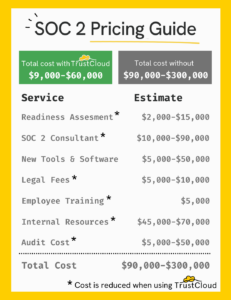
The SOC 2 attestation cost breakdown

The costs associated with SOC 2 attestation are an investment in data security, customer trust, and revenue growth, and organizations often find that the benefits outweigh the costs. Here is a breakdown of the associated costs:

SOC 2
SOC 2 pricing guide

Why cost matters in SOC 2 compliance

The cost associated with obtaining a SOC 2 report is multifaceted. It encompasses both tangible and intangible expenses, such as the fees paid to external auditors, the internal time and resources required to prepare for and sustain the audit, and the investments made in technology and processes to meet compliance criteria.

Organizations must plan thoroughly and budget wisely to ensure a smooth certification process without unexpected financial strain.

Moreover, many companies see SOC 2 compliance as a long-term investment, a one-time expense that can ultimately lead to considerable savings by reducing the risk of data breaches and enhancing overall operational security. While cost considerations are important, they must be balanced against the potential return on investment offered by improved risk management and customer confidence.

Security & compliance experts to support your entire audit journey

Our Trust Network includes proven security and GRC leaders who can help you find the right audit path at any size, stage or budget

Join the network

Lowering the cost of SOC 2 audits with automation & assurance

Automation can save organizations a tremendous amount of money and hundreds of hours spent preparing and completing a SOC 2 audit. A Trust Assurance platform like TrustCloud goes beyond automation to create a more secure, dynamic and streamlined experience. Here’s a summary of the benefits of including TrustCloud in your SOC 2 journey:

  1. Save time with automated evidence collection and control verification, dynamic policy recommendations and programmatic mapping to a common control framework
  2. Create a more secure environment by allowing an auditor to view your program and evidence in your compliance platform, rather than emailing screenshots and attachments
  3. Increase confidence in your compliance program with automated data-to-control mapping and policy governance to ensure evidence always fulfills the requirements.
  4. Avoid repetitive manual work by leveraging a common control framework to map once and adhere to many standards
  5. Stop emailing colleagues for evidence, and find all the information you need in a single platform
  6. Eliminate or dramatically reduce the fees associated with consultants, internal resources, and the cost of the audit itself.

Working with a TrustCloud Audit Partner is a great way to ensure a reliable audit experience and may include reduced rates.

Read the “Master SOC 2 compliance with confidence and ease” article to learn more!

Beyond the audit fee: Hidden costs to budget for

The cost of SOC 2 compliance extends far beyond the audit fee. Many organizations underestimate the hidden expenses that shape the true financial commitment required to prepare, pass, and maintain certification. These additional costs often appear during readiness checks, documentation updates, technology upgrades, and staff allocation. Without anticipating them, teams may face delays, budget overruns, or compliance setbacks. Factoring in both direct and indirect costs creates a more realistic financial roadmap and minimizes unpleasant surprises.

With careful planning, companies can build a sustainable SOC 2 program that not only meets audit expectations but also strengthens long-term security, efficiency, and operational maturity.

  1. Readiness Assessments & Gap Analysis
    A readiness assessment helps organizations uncover gaps before the formal audit begins. Costs range from US$3,000 to US$15,000, depending on scope and complexity. This step identifies missing controls, weak processes, and incomplete documentation early, preventing audit failures and expensive rework. Investing upfront ensures teams enter the audit well-prepared, reducing risk and improving confidence in achieving compliance.
  2. Internal Resource Time & Lost Productivity
    SOC 2 requires dedicated effort, often from senior staff who must oversee evidence collection, remediation, and coordination. With 4 to 6 months of commitment, the opportunity cost can reach US$50,000 to US$75,000. This indirect expense impacts productivity across departments. Planning resource allocation early helps teams absorb workload shifts without compromising ongoing business priorities or operational performance.
  3. Security Tools & Automation Platforms
    Automation platforms like Drata, Vanta, and Secureframe streamline evidence collection, monitoring, and readiness maintenance. Annual costs typically range from US$10,000 to US$50,000. These tools reduce manual workload, improve control accuracy, and ensure continuous compliance. While they add to the budget, they also lower long-term audit costs and minimize human error, making them essential for scalable SOC 2 operations.
  4. Policy, Documentation & Legal Support
    Preparing for SOC 2 often requires rewriting policies, updating vendor contracts, refining data-handling procedures, and ensuring legal alignment. Documentation updates may cost US$3,000 to US$10,000, while legal reviews can exceed US$10,000. These efforts ensure clarity, reduce compliance risk, and create defensible evidence for auditors. Without proper documentation, even strong controls may fail during assessment.
  5. Ongoing Maintenance & Re-Certification
    SOC 2 compliance continues long after the first audit. Annual audits, tool subscriptions, control testing, and continuous monitoring can add US$10,000 to US$40,000 per year. These recurring costs ensure the organization maintains a strong security posture and remains ready for future audits. Treating SOC 2 as a long-term investment helps teams avoid lapses in compliance.
  6. Direct vs Indirect Costs
    Direct costs include audit fees, consulting services, and software purchases—expenses that are simple to calculate. Indirect costs are less obvious but equally impactful, such as internal labor, training time, operational disruptions, and ongoing monitoring activities. Recognizing both categories prevents under-budgeting and helps organizations build a holistic financial plan that supports smooth certification and long-term compliance sustainability.

Budgeting for SOC 2 requires more than estimating the audit fee; it demands a full understanding of the hidden, ongoing, and opportunity-based costs that influence the entire compliance journey. By planning for readiness work, internal effort, technology tools, documentation updates, and recurring maintenance, organizations can avoid financial surprises and approach SOC 2 with confidence. Thoughtful budgeting leads to smoother audits, stronger security practices, and long-lasting operational resilience.

TrustCloud® – SECURITY ASSURANCE PLATFORM

The most affordable way to upgrade security to a profit center

Learn More

Planning and budgeting for SOC 2 compliance

Planning and budgeting for SOC 2 compliance requires a structured approach that balances financial clarity with operational readiness. Before diving into audits or remediation, organizations should begin with an internal gap analysis to assess how closely their current controls align with SOC 2 expectations. This early review highlights weaknesses in documentation, technology, and processes, enabling teams to estimate effort and costs more accurately.

Although these assessments may range from a few thousand to tens of thousands of dollars, the insights they reveal form the foundation for a well-organized compliance roadmap. With proper preparation, organizations can avoid surprises and move confidently into detailed planning.

1. Conducting a Readiness Assessment

A readiness assessment evaluates how prepared your systems, processes, and controls are for SOC 2. It often requires support from specialists who identify gaps that internal teams may overlook. Costs typically range from US$5,000 to US$30,000, depending on organizational size and complexity. This step provides a clear understanding of deficiencies and creates a focused roadmap for remediation and budgeting.

2. Developing a Remediation Plan

Once gaps are identified, a remediation plan outlines the improvements needed to meet SOC 2 requirements. This may include implementing new controls, updating technology, revising policies, or expanding employee training. Depending on the depth of needed improvements, remediation may add US$20,000 to US$50,000 or more. This investment strengthens your environment and ensures smoother progress during the audit phase.

3. Estimating Internal Resource Commitments

Internal teams play a major role in SOC 2 preparation, from policy updates to managing evidence collection. Accurately budgeting time and workload is essential to prevent bottlenecks. Organizations must evaluate staff availability, skill gaps, and competing priorities. While leveraging internal resources helps reduce external spending, it requires careful planning to ensure compliance tasks are completed without overwhelming existing teams.

4. Balancing Internal and External Expertise

Choosing the right mix of in-house talent and external consultants greatly influences costs and outcomes. Organizations with strong internal controls may only need limited consulting support. Those lacking experience may outsource more, resulting in higher expenses of US$50,000 to US$100,000. The key is selecting a balance that ensures compliance without compromising quality or creating unnecessary financial strain.

5. Setting Aside Contingency Budget

SOC 2 preparation often uncovers unexpected gaps or technology needs, making contingency funds essential. These additional costs may include new monitoring tools, stronger access controls, or extended consulting hours. Allocating extra budget upfront helps avoid delays and financial surprises. A contingency buffer ensures organizations can adapt quickly and stay aligned with their compliance timeline and audit objectives.

Thoughtful planning and budgeting make the SOC 2 journey far more predictable and efficient. By assessing readiness, prioritizing remediation, and selecting the right mix of internal and external expertise, organizations can build a realistic financial and operational roadmap. With clear insights and strategic budgeting, SOC 2 compliance becomes a manageable investment that strengthens trust, security, and long-term business readiness.

SOC 2 Overview and Guides

This guide explains the basics of the SOC 2 compliance readiness process and gives an outline of what you can expect as you work towards compliance.

Read More

Assessing the ROI of SOC 2 compliance

While the cost of SOC 2 certification may seem high, it is essential to view these expenses within the larger context of risk management and operational resilience. The return on investment (ROI) for SOC 2 compliance is often measured not only in direct financial gains but also in benefits that are harder to quantify, such as improved customer trust, reduced risk of data breaches, and enhanced competitive positioning.

Companies that invest in robust security controls are less likely to suffer the financial and reputational damage associated with data breaches or non-compliance penalties. Furthermore, SOC 2 certification can be a decisive factor in winning new business, particularly in industries where data protection is paramount. In this way, the cost of compliance can be partially offset by long-term savings and increased revenue opportunities.

Why the investment is worth it

The cost of SOC 2 compliance might seem steep at first glance, but the returns on this investment are multifaceted. Achieving SOC 2 certification helps reinforce your organization’s commitment to security and privacy, which can be a significant competitive differentiator, especially for companies in technology, healthcare, finance, and other data-sensitive industries. Clients and partners increasingly demand that their vendors demonstrate robust security practices, and SOC 2 is widely recognized as a gold standard in ensuring data protection and operational reliability.

Moreover, a comprehensive SOC 2 framework helps organizations mitigate risks that can lead to costly data breaches and regulatory penalties. By proactively addressing potential vulnerabilities, you safeguard your reputation and customer trust. The long-term savings from reduced incident response costs, lower insurance premiums, and improved customer retention can far outweigh upfront expenses.

Summing it up

Understanding the full cost of SOC 2 certification is essential, not just for budgeting, but for making a strategic investment in trust and growth. From audits and readiness assessments to tools, training, and internal time, organizations should prepare for a layered cost profile:

  1. Audit fees typically range from $5,000 to $50,000+, depending on whether you’re pursuing Type I or Type II certification.
  2. Readiness work, like controls design and documentation, can add $3,000 to $15,000, plus internal labor costs.
  3. Security tooling and automation often represent recurring expenses, sometimes up to $50,000 annually, but they can dramatically simplify compliance and reduce audit friction.
  4. Hidden costs, including legal review, staff training, and lost productivity, should also be part of your calculations.

That said, SOC 2 holds immense value. It unlocks enterprise opportunities, strengthens relationships with customers, and lays the groundwork for long-term brand credibility. With careful preparation and smart automation tools, many organizations find that the benefits far outweigh the investment. Let your cost planning reflect readiness, not risk.

FAQs

How much does a SOC 2 audit typically cost?

The cost of a SOC 2 audit can vary widely based on factors such as whether you use a platform like TrustCloud, the audit firm, the audit’s scope, and the complexity of your organization’s systems. Costs can range from several thousand dollars to tens of thousands or more.

The primary factors include the type of audit (Type I or Type II), the scope of the audit, the size and reputation of the audit firm, the location of your organization, and the level of preparation required.

Yes, Type II audits, which assess the effectiveness of controls over a period of time, are generally more expensive than Type I audits, which focus on control design and existence at a specific point in time.

Yes, SOC 2 compliance is an ongoing effort that requires continuous monitoring, maintenance of controls, and periodic reassessments. Ongoing costs may include annual audits, monitoring tools, and employee training.

While audit fees and preparation costs are the most visible expenses, organizations should also budget for potential costs related to technology investments, third-party vendor assessments, legal fees, and incident response planning. Here’s a list of applications commonly used by firms achieving SOC 2 compliance.

While using in-house resources can reduce some costs, it may not be practical for all organizations. In-house expertise is essential, but many organizations also benefit from external consultants and audit firms to ensure compliance.

The value of SOC 2 attestation goes beyond compliance; it can enhance customer trust, attract new business, and demonstrate a commitment to data security. For many companies, passing a SOC 2 audit is required to win business from larger customers. Organizations often find that the benefits outweigh the costs.

To get an accurate estimate, consult with multiple audit firms, discuss your specific needs with them, and conduct a detailed cost analysis based on your organization’s unique situation.

Some cost-saving strategies include effective preparation and documentation, using compliance management software, and selecting the right audit firm with experience in your industry.

It’s possible to negotiate audit fees to some extent, especially if you have multiple audit firms to choose from. For example, TrustCloud audit partners offer discounts to TrustCloud customers. See a list of our audit partners here.

For more about SOC 2, visit the SOC 2 section in our GRC Launchpad, or read our guide for preparing for a SOC 2 audit.

Got Trust?®

TrustCloud makes it effortless for companies to share their data security, privacy, and governance posture with auditors, customers, and board of directors.
Trusty