


Hybrid IT has become the new normal, blending public cloud, private cloud, on-premises systems, and even legacy platforms that refuse to disappear. This complexity makes risk management harder, with blind spots that traditional audits or point-in-time checks simply can’t address. Continuous Control Monitoring (CCM) is the answer, offering always-on oversight to keep security and compliance in step with business change.
The future of CCM lies in smarter, more adaptive technologies. Real-time compliance dashboards are already giving leaders instant visibility into control health across their environments. AI is being applied to detect anomalies, flagging unusual patterns before they become full-blown issues. Some platforms are even experimenting with self-healing controls, where automated workflows correct misconfigurations on the spot, reducing both downtime and human effort. Together, these advances signal a shift: CCM is no longer just about monitoring; it’s about anticipating, adapting, and protecting at the pace of modern IT.
This article explores the future of continuous control monitoring over the next five years, focusing on emerging trends and challenges in hybrid IT environments. It provides insights into real-world implementations, includes regulatory compliance perspectives, and offers actionable recommendations for leaders who are tasked with navigating this ever-changing landscape.
What is continuous control monitoring?
Continuous Control Monitoring (CCM) is the practice of using technology to automatically and continuously test, track, and enforce an organization’s internal controls across its IT, security, and business systems. Instead of relying on manual checks or one-off audits, CCM provides real-time visibility into whether controls are working as intended, helping organizations spot issues faster, reduce compliance gaps, and strengthen overall risk management.
Key points about CCM
- Ongoing oversight: Controls are monitored 24/7, rather than at quarterly or annual checkpoints.
- Automation-driven: Technology tools run routine checks automatically, reducing manual effort and human error.
- Real-time alerts: When a control fails, say, an access policy isn’t enforced or encryption isn’t applied, teams are notified immediately.
- Supports compliance: CCM aligns with frameworks like SOC 2, ISO 27001, HIPAA, GDPR, and CCPA by keeping evidence of compliance up to date.
- Proactive risk management: Instead of reacting to audit findings or incidents after the fact, CCM helps organizations prevent problems before they escalate.
In short, CCM transforms compliance from a reactive, box-ticking exercise into a continuous, risk-aware process that strengthens both security and trust.
Emerging trends in continuous control monitoring
As organizations increasingly operate within hybrid IT environments, continuous control monitoring (CCM) has evolved into a cornerstone of modern cybersecurity and compliance. The need for real-time visibility, proactive risk mitigation, and automated responses has driven several emerging trends that redefine how businesses maintain operational integrity.
The integration of artificial intelligence, blockchain, and automation is transforming CCM from a reactive process into a predictive, self-learning system. Simultaneously, the proliferation of IoT devices and edge computing expands monitoring boundaries, while API-driven architectures demand stronger, interconnected controls. These advancements not only improve efficiency and accuracy but also ensure that compliance and security frameworks stay resilient amid technological complexity.

The evolution of hybrid IT environments has led to the emergence of several key trends that are poised to shape the future of continuous control monitoring:
- Increased Integration of Artificial Intelligence and Machine Learning
Advanced AI algorithms and machine learning models are now capable of identifying anomalous activities and potential breaches in real time. This enhanced analytical capacity promises not only to detect irregularities faster but also to predict emerging threats based on historical patterns. - Automated Remediation and Alert Systems
The future of continuous control monitoring will increasingly rely on automated systems that can initiate remediation protocols immediately upon detecting a deviation from normal activity. These systems not only reduce response times but also help in minimizing human error during critical intervention periods. - Blockchain and Distributed Ledger Technologies
Leveraging decentralized and immutable ledgers will enhance transparency and trust in complex IT systems. With blockchain-enabled control monitoring, every change or event within the hybrid environment is recorded in a verifiable manner, ensuring both accountability and regulatory compliance. - Proliferation of IoT and Edge Computing
The expansion of IoT and edge computing is creating additional nodes and endpoints that must be continuously monitored. Integrating these disparate elements into a cohesive monitoring framework presents both opportunities for enriched data collection and challenges in standardizing controls. - Enhanced API Security and Data Integration
As hybrid systems rely heavily on APIs to enable interconnectivity between platforms, securing these interfaces is critical. Future CCM solutions will prioritize robust API governance, ensuring seamless integration and monitoring across diverse applications and services.
These trends, combined with rapidly evolving regulatory landscapes, will drive significant changes in how continuous control monitoring is implemented and managed. Leaders must be prepared to adapt strategies to mitigate risk, protect sensitive data, and adhere to regulatory guidelines.

Looking for automated, always-on IT control assurance?
TrustCloud keeps your compliance audit-ready so you never miss a beat.
Learn MoreIntegrating continuous control monitoring into hybrid IT environments
Integrating Continuous Control Monitoring (CCM) into hybrid IT environments is an ongoing journey rather than a one-time deployment. As organizations balance cloud, on-premise, and edge technologies, maintaining consistent oversight becomes increasingly complex. A well-implemented CCM strategy ensures real-time visibility, proactive risk management, and seamless compliance across distributed systems.
Success lies in uniting technology, governance, and people to form a cohesive control ecosystem. By aligning monitoring capabilities with organizational priorities and regulatory expectations, businesses can create a future-ready framework that adapts to evolving threats. Continuous monitoring doesn’t just detect anomalies; it strengthens operational resilience and drives smarter, data-informed decision-making.
1. Conducting a Comprehensive Risk Assessment
Begin with a detailed risk assessment that maps your hybrid infrastructure’s vulnerabilities and critical assets. Analyze both cloud and on-premise systems for exposure points, compliance obligations, and operational dependencies. This foundational step helps identify where continuous controls are most needed and ensures your CCM deployment aligns with business objectives and regulatory expectations.
2. Leveraging Flexible and Integrative Technology
Select a CCM platform designed for flexibility and interoperability. The ideal solution integrates with existing IT management tools, APIs, and cloud platforms to provide unified visibility. A centralized dashboard aggregates and normalizes data across systems, giving real-time insights into control performance and enabling swift, coordinated responses to security or compliance incidents.
3. Developing Customized Control Frameworks
Every organization faces unique risk landscapes. Create customized control frameworks that align with your specific regulatory requirements, risk tolerance, and industry standards. Tailored frameworks enable more accurate monitoring, ensuring that controls reflect your operational realities while supporting compliance goals. This approach strengthens both efficiency and the organization’s overall security posture.
4. Automating Control Monitoring Processes
Automation is essential for scaling CCM in hybrid environments. Implement automated workflows that continuously validate controls, flag anomalies, and trigger remediation protocols. Automated checks reduce human error, improve response times, and allow teams to focus on analysis and strategic initiatives rather than manual monitoring and repetitive compliance tasks.
5. Training Teams and Fostering a Culture of Continuous Improvement
Technology alone cannot sustain effective control monitoring. Invest in ongoing training to ensure teams understand both the technical and strategic aspects of CCM. Encourage feedback loops and knowledge sharing to refine processes over time. A culture that values learning and adaptability fosters proactive management and continuous operational enhancement.
6. Establishing Governance and Accountability Structures
Strong governance underpins every successful CCM initiative. Define clear ownership for monitoring activities, reporting responsibilities, and escalation procedures. Establishing transparent accountability ensures controls are maintained, incidents are resolved promptly, and leadership has confidence in the organization’s compliance and security posture across all IT environments.
Integrating CCM into hybrid IT ecosystems is not simply a technical upgrade—it’s a strategic evolution. By combining flexible technology, customized frameworks, automation, and strong governance, organizations can maintain continuous oversight across dynamic infrastructures. A culture of collaboration and improvement ensures that CCM remains aligned with business goals, helping enterprises stay secure, compliant, and resilient amid constant technological change.
Read the “Cybersecurity and technology controls: Safeguarding digital assets” article to learn more!
Challenges in the hybrid IT environment
As organizations increasingly embrace hybrid IT models that combine cloud-based systems with traditional on-premises infrastructure, they unlock flexibility and scalability but also face a complex set of challenges. Hybrid environments introduce integration issues, fragmented security controls, and heightened regulatory responsibilities. Managing multiple systems, vendors, and data streams can easily overwhelm existing monitoring frameworks, leaving blind spots that compromise security and compliance. Additionally, resource constraints and a rapidly changing threat landscape intensify the difficulty of maintaining consistent oversight.
Overcoming these challenges requires not only advanced technology but also coordinated governance and collaboration across IT, compliance, and business functions to ensure a unified defense strategy.
1. Complexity of Integration
Connecting legacy infrastructure with modern cloud platforms is one of the biggest hurdles in hybrid IT. This process often requires customized middleware or APIs to ensure seamless communication. Without proper synchronization, data inconsistencies and control gaps can emerge, potentially compromising system reliability and creating vulnerabilities in continuous monitoring processes.
2. Data Privacy and Regulatory Compliance
The hybrid model multiplies data-handling complexities, making compliance with global regulations like GDPR, HIPAA, and CCPA more challenging. Organizations must maintain end-to-end visibility of data flow and storage, enforce strict access controls, and produce transparent audit reports to demonstrate compliance, all while safeguarding sensitive information from unauthorized exposure.
3. Lack of Standardized Protocols
In a hybrid IT landscape, different vendors and systems often operate under varying standards and security protocols. This inconsistency can create monitoring blind spots or interoperability issues. Without standardized governance frameworks, organizations struggle to maintain uniform control coverage, increasing the likelihood of security lapses and compliance failures.
4. Resource Constraints
Implementing continuous control monitoring across hybrid systems demands investment in advanced technology and skilled personnel. However, many organizations, especially smaller ones, lack sufficient financial or human resources to deploy and manage these tools effectively. This limitation can widen security disparities and delay timely threat detection and response.
5. Rapidly Evolving Threat Landscape
The hybrid model expands the attack surface, exposing multiple entry points across on-premise and cloud systems. Cyber threats evolve rapidly, often outpacing traditional defense mechanisms. Organizations must adopt agile monitoring strategies that use automation, artificial intelligence, and threat intelligence to adapt quickly to emerging risks and maintain resilient defenses.
6. Organizational Silos and Misalignment
A major challenge lies in the lack of coordination between IT, compliance, and business units. When these teams operate in silos, risk awareness and decision-making become fragmented. Aligning objectives, fostering communication, and defining shared responsibilities are crucial to ensure effective monitoring and unified risk management across hybrid infrastructures.
Successfully navigating the challenges of hybrid IT environments demands more than just technological sophistication; it requires strategic alignment, cross-functional collaboration, and a proactive mindset. By breaking down organizational silos, standardizing protocols, and investing in continuous training and automation, enterprises can strengthen their resilience. The key lies in creating a harmonized ecosystem where technology, governance, and people work together to achieve secure and sustainable hybrid operations.
Read the “Fine-tuning your access control policy: Strategies for balancing security and usability” article to learn more!
Regulatory compliance perspectives
Compliance is no longer a periodic exercise but a continuous process that demands transparency, accountability, and adaptability. Continuous Control Monitoring (CCM) has become an essential tool for organizations striving to meet global compliance requirements while maintaining operational efficiency. By embedding continuous monitoring into compliance frameworks, businesses can ensure that every process, transaction, and control remains aligned with regulatory expectations in real time.
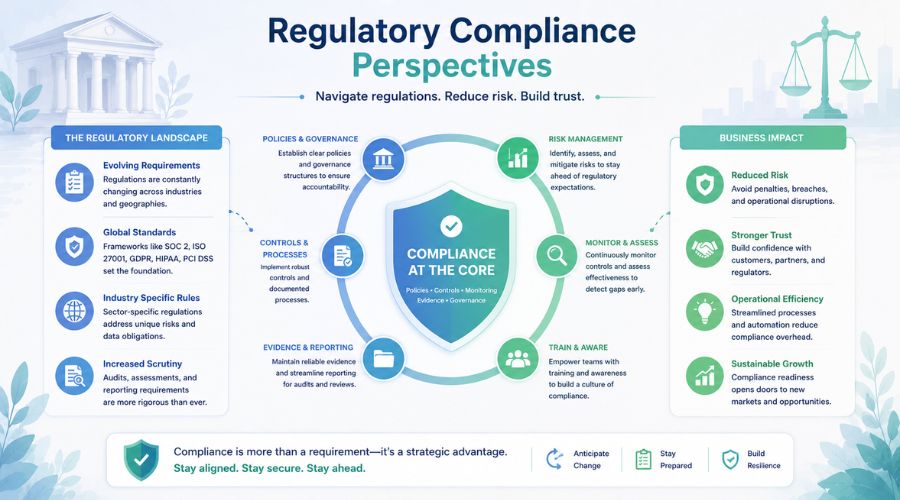
As laws evolve and cross-border regulations become more stringent, CCM enables proactive compliance management, detecting deviations early, producing verifiable audit trails, and ensuring that data protection and risk mitigation efforts are consistently enforced. This shift toward continuous oversight not only safeguards organizations from regulatory penalties but also builds trust with stakeholders and enhances long-term resilience.
- Transparency and Auditability
Regulators now demand complete visibility into business processes and controls. Continuous control monitoring powered by technologies like blockchain can record every system change or transaction immutably. These tamper-proof audit trails enhance transparency and accountability, enabling organizations to demonstrate compliance effortlessly during audits and reinforce credibility with regulators, investors, and customers alike. - Data Protection and Privacy
With privacy regulations such as GDPR, CCPA, and HIPAA, maintaining robust data protection measures has become imperative. CCM helps monitor data access, usage, and transfer in real time, immediately flagging unauthorized activity. This ensures compliance with privacy mandates while minimizing the risk of data breaches and reinforcing the organization’s commitment to responsible information governance. - Proactive Risk Management
Modern regulatory expectations favor prevention over reaction. Advanced CCM systems that use artificial intelligence and machine learning can analyze patterns to predict potential risks and compliance gaps before they escalate. By triggering alerts early, organizations can intervene proactively, reducing exposure to non-compliance penalties and improving overall governance effectiveness. - Global Standards Alignment
Operating across multiple jurisdictions requires adherence to a patchwork of regulatory standards. A unified CCM framework helps streamline compliance by harmonizing monitoring practices across regions. Adaptive configurations enable organizations to address both global frameworks (like ISO and SOC 2) and local regulations simultaneously, ensuring consistency without compromising flexibility. - Continuous Reporting and Adaptation
As regulatory requirements evolve, static compliance processes quickly become outdated. CCM solutions support dynamic reporting that adapts to changing laws, enabling organizations to maintain compliance continuity. Automated updates and customizable dashboards keep compliance teams informed, ensuring that responses to new mandates are timely, data-driven, and well-documented. - Integration with Governance Frameworks
Embedding CCM into broader governance structures strengthens enterprise-wide accountability. By linking monitoring results directly to governance and risk management processes, organizations create a closed feedback loop that promotes informed decision-making. This integration ensures that compliance is not a standalone function but a strategic enabler of ethical, transparent business operations.
As regulatory environments continue to evolve, continuous control monitoring will be indispensable for achieving sustainable compliance. Organizations that invest in intelligent CCM frameworks can balance operational agility with accountability, meeting global standards while driving innovation. Over the next few years, those that prioritize proactive monitoring and transparent governance will not only maintain compliance but also position themselves as leaders in responsible business conduct.
Continuous IT control assurance, while automating compliance
Get continuous visibility into application, data, and infrastructure security, and the implementation and operational status of security controls with TrustOps. Pass audits with confidence, reclaim your time and budget, and unlock new opportunities for your business.
The role of compliance and regulation
Compliance requirements and regulatory expectations are among the strongest forces driving the adoption of continuous control monitoring (CCM) across modern organizations. Industries such as healthcare, banking, insurance, government, and critical infrastructure operate under strict oversight to ensure data security, operational integrity, and customer protection. Traditional manual compliance methods are no longer sufficient in fast-changing digital environments where threats evolve constantly and regulations become more complex each year.
Continuous control monitoring enables organizations to automate oversight activities, detect control failures in real time, and generate accurate compliance evidence continuously. By integrating compliance directly into daily operations, CCM helps businesses strengthen governance, reduce audit burdens, improve resilience, and adapt more efficiently to evolving regulatory landscapes.
Regulatory pressure is increasing across industries
Governments and regulatory agencies are introducing stricter rules around cybersecurity, privacy, financial reporting, and operational resilience. Frameworks such as GDPR, HIPAA, PCI DSS, SOC 2, ISO 27001, and industry-specific mandates require organizations to demonstrate continuous compliance rather than periodic readiness alone. Businesses operating across multiple jurisdictions face even greater complexity. Continuous control monitoring helps organizations maintain visibility into compliance requirements and reduces the risk of violations caused by overlooked gaps, outdated controls, or inconsistent reporting practices.
Continuous monitoring improves audit readiness
Traditional audits often involve time-consuming manual evidence gathering and reactive remediation efforts. CCM systems simplify this process by continuously collecting, validating, and documenting control performance in real time. Automated reporting capabilities help organizations generate audit-ready evidence quickly and accurately. Instead of scrambling before regulatory reviews or customer assessments, businesses can maintain an ongoing state of readiness. This proactive approach reduces operational stress, accelerates audits, and improves confidence during compliance evaluations and external inspections.
Automation reduces compliance-related risks
Human error remains one of the largest contributors to compliance failures and operational security incidents. Manual monitoring processes can overlook policy violations, misconfigurations, or control breakdowns that expose organizations to regulatory penalties and reputational damage. CCM platforms automate monitoring tasks, trigger alerts for anomalies, and track remediation efforts consistently. Automation strengthens accountability and reduces the likelihood of missed controls or delayed responses, helping organizations manage compliance obligations more effectively in increasingly complex digital environments.
Real-time visibility strengthens governance
Continuous control monitoring provides organizations with real-time insights into the health and effectiveness of security and compliance controls. Leadership teams gain centralized dashboards and actionable intelligence that help them understand operational risks, compliance posture, and emerging vulnerabilities across the organization. This visibility supports faster decision-making, stronger governance, and more proactive risk management. Real-time oversight also helps organizations identify trends and recurring weaknesses before they escalate into regulatory violations or operational disruptions.
Regulatory intelligence will shape future CCM platforms
As regulations evolve more rapidly, future CCM solutions are expected to include advanced regulatory intelligence capabilities. These features may automatically track regulatory updates, map new requirements to existing controls, and recommend adjustments to compliance frameworks in real time. AI-driven compliance engines could help organizations interpret complex regulations, prioritize remediation efforts, and streamline policy updates automatically. This evolution will enable businesses to adapt more quickly to changing regulatory expectations while reducing manual compliance overhead significantly.
Compliance can become a competitive advantage
Organizations that maintain strong compliance and monitoring programs often gain advantages beyond avoiding penalties. Customers, partners, and investors increasingly prefer businesses that demonstrate transparency, accountability, and mature governance practices. Continuous monitoring builds trust by showing stakeholders that compliance is embedded into everyday operations rather than treated as a periodic exercise. Businesses with strong compliance programs may also accelerate enterprise sales, strengthen partnerships, and improve market reputation in highly regulated industries where trust is a critical differentiator.
Compliance and regulation are no longer isolated responsibilities managed only during audits or annual reviews. They have become continuous operational priorities that directly influence business resilience, customer trust, and organizational growth. Continuous control monitoring enables organizations to move from reactive compliance management toward proactive governance and real-time risk oversight.
As regulations continue to evolve alongside emerging cyber threats and digital transformation initiatives, organizations that invest in intelligent, adaptive CCM systems will be better equipped to maintain compliance, reduce operational risks, and build sustainable competitive advantages in an increasingly regulated global business environment.
Read the “Map Controls to Multiple Compliance Standards” article to learn more!
Strategies for successful adoption
Adopting Continuous Control Monitoring (CCM) goes beyond deploying cutting-edge technologies; it’s about transforming how teams think, collaborate, and manage risk in a hybrid IT ecosystem. Successful adoption depends on strategic planning, stakeholder alignment, and a culture that values ongoing improvement. CCM delivers its true potential when it’s woven into an organization’s broader governance, risk, and compliance (GRC) framework.
By emphasizing collaboration, data integrity, and incremental implementation, companies can ensure that their CCM programs not only enhance security and compliance but also strengthen business agility and resilience in an evolving digital landscape.
- Establish a Clear Vision
Define a strong vision outlining the purpose and scope of CCM within your organization. Identify key risks, regulatory obligations, and business outcomes you aim to achieve. Secure executive sponsorship early to ensure alignment with corporate strategy and obtain the necessary resources. A clear vision provides direction, purpose, and measurable success benchmarks. - Implement Incremental Changes
Avoid rushing full-scale implementation. Instead, begin with pilot projects focusing on high-priority systems or processes. Evaluate the results, collect user feedback, and refine methodologies before expanding to other areas. Incremental implementation reduces disruption, allows for adaptive learning, and enables smoother scaling across departments while minimizing operational risk. - Build Cross-Functional Teams
CCM thrives on collaboration between IT, compliance, risk management, and business units. Form diverse teams that combine technical expertise with strategic oversight. Cross-functional engagement ensures that control monitoring aligns with both security requirements and business priorities, fostering shared accountability and organization-wide support for continuous monitoring initiatives. - Invest in Training and Change Management
Empower your workforce with knowledge. Conduct regular training sessions to familiarize teams with CCM tools, reporting mechanisms, and remediation processes. A structured change management plan minimizes resistance, builds confidence in new workflows, and helps employees see CCM as a driver of efficiency and security rather than a compliance burden. - Prioritize Data Quality and Governance
Data is the foundation of effective CCM. Establish rigorous data governance policies to ensure accuracy, completeness, and timeliness of information feeding into monitoring systems. Regular audits of data sources enhance analytical reliability, helping organizations make informed, risk-aware decisions that support both compliance and performance objectives. - Measure and Communicate Impact
Regularly assess CCM’s effectiveness through defined KPIs such as reduced incident response times, improved compliance scores, or audit readiness. Share successes with stakeholders to reinforce support and demonstrate value. Transparent reporting fosters trust and strengthens the business case for continuous investment in monitoring improvements.
The path to successful CCM adoption is a blend of strategy, collaboration, and continuous refinement. By starting with a clear vision, embracing incremental change, and maintaining a strong focus on people and data governance, organizations can seamlessly embed CCM into their hybrid IT environments. The result is a resilient, transparent, and forward-thinking compliance ecosystem built to evolve with the pace of modern technology.
Actionable recommendations for implementation
As organizations embrace hybrid IT environments, effective Continuous Control Monitoring (CCM) becomes a necessity rather than an option. Implementing a robust CCM strategy requires a structured, forward-thinking approach that integrates technology, governance, and people. Leaders must ensure that monitoring systems are not only capable of detecting irregularities but are also adaptable to evolving risks, regulatory requirements, and business priorities. Building a resilient CCM framework demands cross-functional collaboration, automation, and continuous learning.
By aligning monitoring initiatives with long-term risk management and compliance goals, organizations can move from reactive defense to proactive governance, ensuring that every control, process, and system operates in sync with enterprise objectives and future growth.
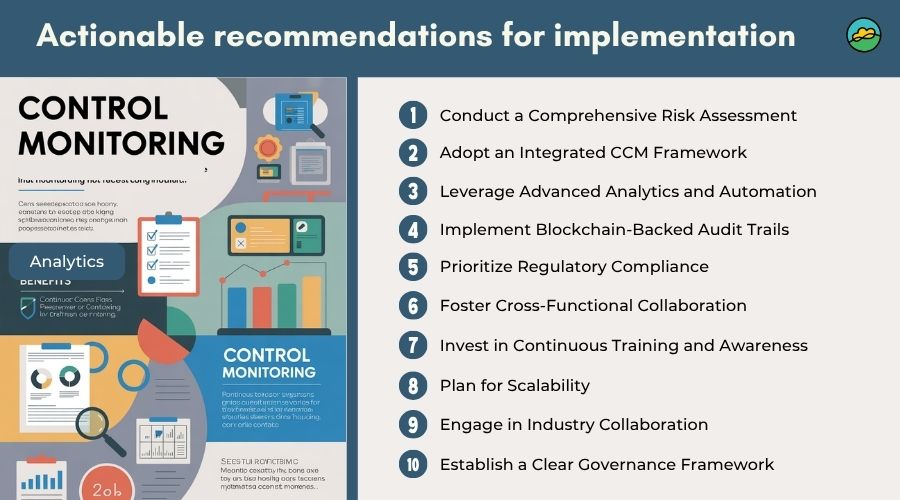
As organizations evaluate their continuous control monitoring strategies in the context of an evolving hybrid IT environment, leaders should consider the following actionable recommendations:
- Conduct a Comprehensive Risk Assessment
Leaders should begin by conducting a thorough risk assessment to understand the current vulnerabilities within their hybrid IT environments. Identify critical assets, assess threats and potential impact, and prioritize areas that need immediate attention. This assessment should be revisited on a regular basis to account for evolving technologies and threat landscapes. - Adopt an Integrated CCM Framework
Consolidate continuous control monitoring across all IT domains, including cloud, on-premise systems, and edge devices. Choose a solution that offers interoperability with existing systems, supports automated remediation, and aligns with your broader IT risk management strategy. - Leverage Advanced Analytics and Automation
Invest in technologies that incorporate artificial intelligence and machine learning to identify anomalies in real time. Automated alerting and remediation not only reduce the burden on human resources but also enable proactive risk management. Ensure that the chosen solution comes with robust integration capabilities for end-to-end monitoring. - Implement Blockchain-Backed Audit Trails
Enhance transparency by integrating blockchain-enabled audit trails into your CCM processes. This ensures immutability, enhances data integrity, and simplifies compliance reporting for regulatory audits. - Prioritize Regulatory Compliance
Align continuous monitoring processes with contemporary regulatory requirements. Engage with compliance experts to map regulatory obligations to your CCM framework and ensure that all data flows and controls are documented in real-time for audit purposes. - Foster Cross-Functional Collaboration
Break down silos within your organization by encouraging collaboration between IT, compliance, risk management, and business units. Unified efforts will ensure that continuous control monitoring addresses the full scope of operational risks and compliance mandates. - Invest in Continuous Training and Awareness
Technology alone cannot ensure the success of a CCM strategy. Regular training sessions for IT staff and regular updates to stakeholders ensure that all parties are aware of the latest threats and the corresponding mitigation strategies. Establish a culture of continuous improvement and awareness across the organization. - Plan for Scalability
As your network grows and evolves, the CCM solution should scale accordingly. Future-proof your monitoring system by selecting a platform that can adapt to increased loads, incorporate emerging technologies, and support distributed monitoring across global offices. - Engage in Industry Collaboration
Participate in industry groups and engage with peers to share insights, experiences, and best practices regarding continuous control monitoring. Collaborative approaches can lead to innovative solutions and more resilient control environments. - Establish a Clear Governance Framework
Define roles, responsibilities, and reporting structures for continuous control monitoring efforts. Clear governance ensures that the initiative maintains momentum and that accountability is maintained across all levels of the organization.
By following these recommendations, leaders can build robust continuous control monitoring architectures that not only meet today’s demands but also anticipate the evolving challenges of tomorrow. The integration of advanced technologies with strategic oversight will fortify an organization’s ability to detect, remediate, and adapt to a rapidly changing hybrid IT landscape.
Read the “How to build a unified control framework for multi-standard compliance” article to learn more!
Looking ahead: The next five years
The next five years will witness significant technological evolution in the realm of continuous control monitoring and hybrid IT architectures. The shift towards fully integrated, AI-driven monitoring systems signals that the future of CCM is not merely about detection but about predictive risk management and strategic foresight.
As IoT devices proliferate and edge computing becomes more prevalent, the complexity of IT environments will increase exponentially. This will demand not only enhanced technological solutions but also more dynamic policy frameworks that align with global regulatory standards. Organizations that invest in scalable, innovative CCM technologies today will be better positioned to navigate these future challenges.
The anticipated convergence of blockchain, AI, and automated remediation processes will not just drive operational efficiencies but will also transform how organizations approach regulatory compliance. Leaders are encouraged to embrace these technologies while remaining vigilant to the risks and challenges inherent in hybrid IT ecosystems.
Organizations must prioritize continuous learning, agile adaptation, and strategic investments in both technology and human capital. By doing so, they can secure their competitive advantage, protect sensitive data, and ensure long-term operational resilience.
How TrustCloud offers continuous control monitoring
TrustCloud’s TrustOps platform elevates continuous control monitoring from reactive checkboxes to proactive assurance in real time. By automating evidence collection and control performance checks across your IT and security stack, TrustOps ensures that critical controls are always active and performing as intended. Built-in dashboards keep stakeholders informed with live insights, while automated alerts highlight deviations before they escalate.
Summing it up
As hybrid IT landscapes grow more complex, the future of compliance demands a shift from periodic checks to continuous control monitoring. This evolution equips organizations with real-time insights into control effectiveness, enhancing responsiveness, reducing compliance gaps, and strengthening operational resilience.
By embedding automated controls, live dashboards, and integrated alerting into the fabric of your environment, you align security with business agility. Ultimately, continuous control monitoring transforms audit prep from a reactive scramble into a seamless, ongoing assurance tool, empowering teams to drive forward with confidence and focus on strategic growth.
Frequently asked questions
What is continuous control monitoring, and why is it essential in hybrid IT environments?
Continuous control monitoring (CCM) refers to an ongoing, real-time approach to overseeing the performance of IT controls, covering areas like access, configurations, and system behavior. Unlike traditional point-in-time audits, CCM provides nonstop visibility and responsiveness. In hybrid IT environments, where organizations juggle a mix of legacy infrastructure and modern cloud tools, risk management becomes more complex. CCM plays a critical role by automatically identifying gaps, anomalies, or emerging threats across all environments.
For leaders and CISOs, this means better resilience, quicker detection of compliance issues, and the ability to evolve control strategies dynamically as hybrid infrastructure changes.
What challenges do hybrid IT environments pose for traditional control monitoring models?
Hybrid IT landscapes are inherently fragmented, often spanning on-premises data centers, public clouds, and edge systems. Traditional control monitoring, relying on manual checks and periodic scans, struggles to keep pace. Gaps in visibility mean vulnerabilities may go unnoticed. Additionally, modern attackers capitalize on this complexity, exploiting inconsistencies across systems.
Traditional models also fail to align with speeding regulatory expectations that demand proactive risk assurance. As a result, organizations relying on legacy monitoring face heightened exposure—making automated, continuous oversight not just valuable, but foundational to maintaining security, compliance, and operational continuity.
What are the future trends in continuous control monitoring for hybrid IT, and how should organizations prepare?
The future of CCM is shaped by advanced automation, AI-driven insights, and integrated observability. Trends include predictive analytics for preempting control failures, machine learning to surface anomalous behavior, and unified monitoring platforms that correlate data across hybrid systems. Increasingly, CCM will meld with AIOps, security orchestration, and compliance tools, creating a seamless risk management fabric.
Organizations should invest in solutions that support full-stack visibility and automation, augment teams with AI-supported decision-making, and adopt flexible governance that can evolve with emerging technology and regulatory shifts. This strategic alignment ensures control maturity and positions organizations to respond swiftly to threats.
How does CCM support regulatory compliance in hybrid IT environments?
Continuous Control Monitoring enhances regulatory compliance by embedding real-time oversight into an organization’s governance and risk frameworks. As regulations such as GDPR, HIPAA, ISO standards, and others become more stringent, CCM ensures that controls, such as access policies, encryption enforcement, and configuration standards, are continuously validated rather than checked intermittently. Real-time monitoring creates audit trails that are continuously updated, making compliance evidence readily available for internal and external auditors. Using technologies like blockchain can make these trails immutable, enhancing transparency and credibility. CCM also supports proactive risk identification, enabling compliance teams to detect deviations before they become violations, reducing exposure to fines or penalties.
By harmonizing monitoring practices across global standards and local regulations, CCM helps organizations maintain compliance consistency even as regulatory requirements evolve. Dynamic dashboards and automated reporting ensure compliance teams stay informed, enabling timely adaptation to new mandates. Rather than treating compliance as periodic tasks, CCM makes it an ongoing, integrated capability.
What strategic steps should organizations take to successfully adopt CCM?
Successful adoption of Continuous Control Monitoring requires a structured, strategic approach rather than simply deploying technology. First, organizations should establish a clear vision that defines the scope, key risks, and compliance goals tied to CCM, gaining executive sponsorship to align the initiative with corporate strategy. Second, incremental implementation, starting with pilot projects on high-priority systems, allows teams to refine workflows and gather feedback before scaling. Third, building cross-functional teams that include IT, compliance, risk, and business units ensures diverse expertise and shared accountability.
Fourth, investing in training and change management empowers employees to use CCM tools effectively and view them as enablers rather than burdens. Fifth, prioritizing data quality and governance ensures that monitoring systems receive accurate and timely information, which is critical for reliable analytics. Finally, measuring and communicating CCM’s impact through KPIs, such as improved incident response times or audit readiness—helps reinforce its value and sustain ongoing support.
How does CCM evolve with future technologies and business needs?
Continuous Control Monitoring is evolving to meet both future technology trends and shifting business requirements. As hybrid IT environments become more complex with cloud expansion, IoT proliferation, and edge computing adoption, CCM platforms are integrating advanced capabilities like AI-powered predictive analytics and automated remediation to stay ahead of emerging risks. These technologies help organizations not only detect anomalies but also anticipate threats before they become operational problems. Blockchain-enabled audit capabilities enhance trust and transparency, particularly in highly regulated industries. Additionally, CCM tools are increasingly designed to integrate seamlessly with modern API-based architectures, reducing silos and improving interoperability across disparate systems.
As regulatory landscapes continue to change, CCM solutions will support dynamic compliance reporting and built-in regulatory intelligence to help organizations adapt swiftly. Ultimately, future CCM frameworks will serve as strategic enablers of resilience, transforming compliance and risk management from retrospective activities to forward-looking governance practices that align with business goals and technological innovation.
